

Hoq Cave
Hoq Cave: Exploring Socotra’s Underground History
Hoq Cave is one of the most fascinating places to explore on Socotra Island, Yemen. Hidden within the limestone landscape of the island’s northeastern coast, the cave combines dramatic underground scenery with an extraordinary collection of ancient inscriptions and archaeological remains.
While Socotra is best known for its unusual trees, beaches, mountains, and isolated landscapes, Hoq Cave reveals a completely different side of the island. Beneath the rocky plateau lies an enormous underground world filled with limestone formations, dark chambers, and evidence of travellers who passed through Socotra many centuries ago.
For visitors interested in nature, adventure, geology, or history, Hoq Cave is one of the island’s most distinctive destinations.
A Huge Limestone Cave
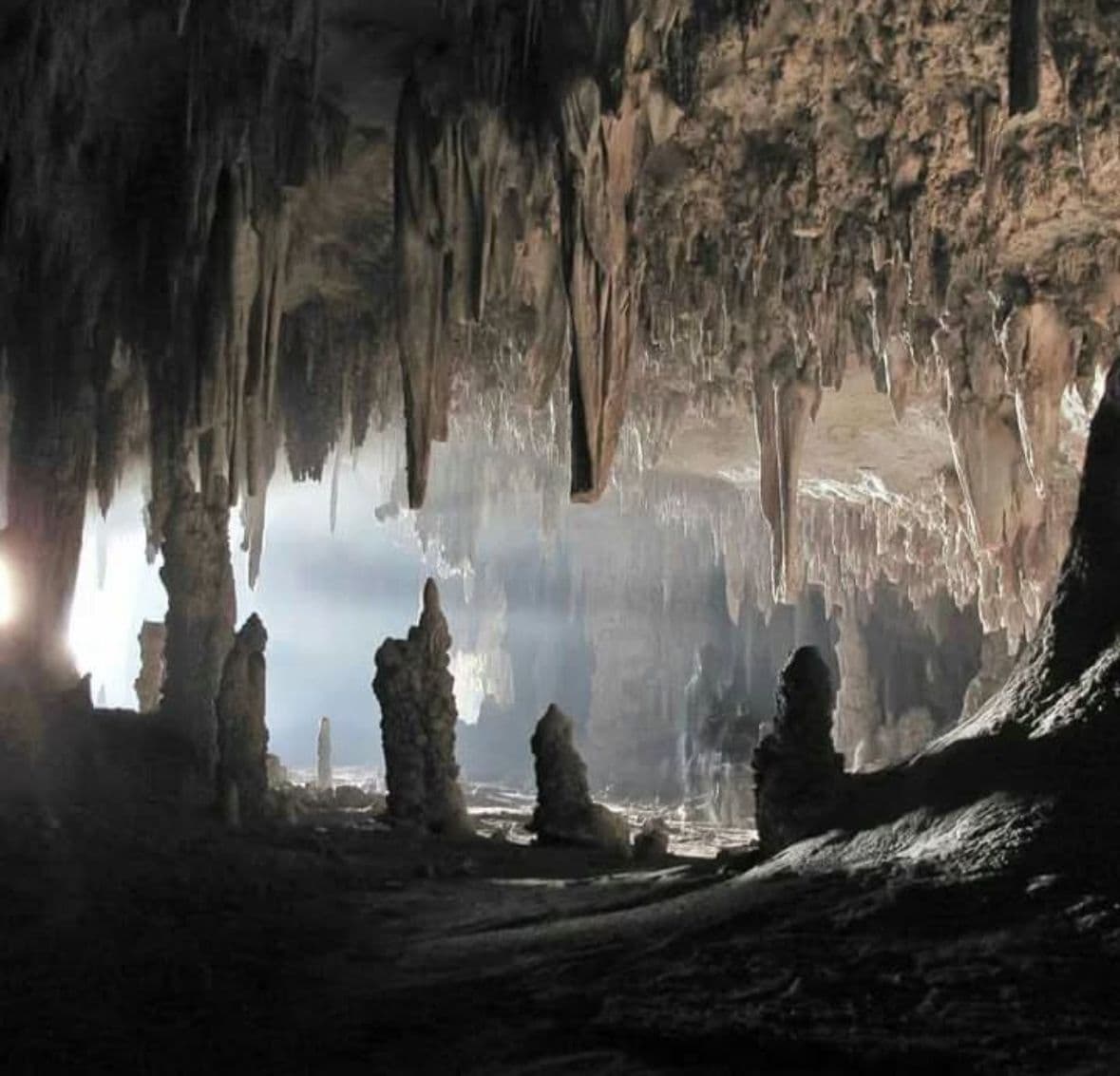
Hoq Cave stretches for approximately 2.5 kilometres into the limestone plateau of northeastern Socotra. Its main underground gallery is exceptionally large, reaching up to around 100 metres wide and 30 metres high in some sections.
The entrance itself is impressive, opening high above the surrounding coastal landscape.
Natural daylight reaches only the first section of the cave. After approximately 200 metres, artificial lighting becomes necessary as visitors continue deeper underground.
Inside, the atmosphere changes completely from the bright and dry landscape outside.
The cave becomes cool, humid, quiet, and increasingly dark.
Stalactites and Stalagmites
One of the main attractions inside Hoq Cave is its remarkable collection of limestone formations.
Over thousands of years, mineral-rich water has slowly passed through the limestone, creating stalactites hanging from the ceiling and stalagmites rising from the cave floor.
Some formations are thin and delicate, while others have grown into huge columns and unusual shapes.
These natural sculptures give the cave an almost otherworldly appearance.
The geological formations are also scientifically valuable. UNESCO documentation notes that Socotra’s caves can preserve mineral deposits capable of providing information about past climate patterns in the Gulf of Aden and Indian Ocean region.
A Journey Into Darkness
Exploring Hoq Cave feels very different from visiting Socotra’s beaches or mountain viewpoints.
Visitors begin with a climb through the rocky landscape before reaching the cave entrance. From there, the route continues through enormous underground chambers.
As you travel farther inside, daylight slowly disappears.
Headlamps or other reliable lighting become essential, illuminating sections of rock while the rest of the enormous chamber remains in darkness.
The size of the cave can be difficult to understand until people are seen standing beside the formations. Against the huge chambers and limestone columns, visitors often appear tiny.
Ancient Inscriptions Inside the Cave
Hoq Cave is not only important because of its natural beauty.
It is also one of Socotra’s most significant archaeological sites.
Researchers have documented around 248 inscriptions and pictograms inside the cave. These include writing associated with Indian, South Arabian, Ethiopian, Greek, and Bactrian traditions.
The inscriptions and drawings date broadly from around the 1st century BC to the 6th century AD.
This makes Hoq Cave an extraordinary historical record.
The people who left these markings were connected with ancient maritime travel and trade across the Indian Ocean.
Evidence of Ancient Travellers
Thousands of years ago, Socotra occupied an important position along maritime routes connecting different regions around the Indian Ocean.
Ships and merchants travelled between Arabia, East Africa, India, and other parts of the ancient world.
The inscriptions preserved inside Hoq Cave provide physical evidence of these connections.
Many of the inscriptions contain personal names or information connected with the identity and origin of visitors. Archaeological research has also uncovered objects such as pottery fragments, incense burners, remains of torches, shells, wooden objects, and an inscribed wooden tablet.
Together, these discoveries show that Socotra was not simply an isolated island.
It was also connected to a much larger network of travellers, sailors, merchants, and cultures.
A Window Into Indian Ocean History
This archaeological evidence makes Hoq Cave particularly important for understanding ancient Indian Ocean trade.
Socotra lies strategically between the Arabian Peninsula and the Horn of Africa, near maritime routes connecting the Red Sea and Arabian Sea with India and beyond.
The variety of languages and scripts found inside Hoq reflects this international movement.
People from different cultural and linguistic backgrounds appear to have reached the island and entered the cave during antiquity.
For historians and archaeologists, Hoq therefore provides a rare record of people who travelled across the Indian Ocean centuries before modern shipping.
The Walk to Hoq Cave
Reaching Hoq Cave requires some effort.
The cave entrance is located high within a limestone plateau, and visitors generally approach it by following a steep walking trail.
The climb itself offers impressive views of Socotra’s northeastern landscape and coastline.
As the trail gains elevation, visitors can look back toward the sea and the surrounding dry terrain.
Because of the heat and exposed landscape, the walk can feel demanding, particularly during the warmer parts of the day.
Good walking shoes, drinking water, sun protection, and a local guide can make the experience much more comfortable.
Inside the Cave
Once inside Hoq, the environment becomes cooler and much more humid.
The deeper sections are completely dark without artificial lighting.
Visitors may encounter enormous limestone columns, smooth rock walls, stalactites, stalagmites, and areas where water has shaped the cave over long periods of time.
The atmosphere is quiet except for dripping water, footsteps, and voices echoing through the chambers.
That silence is one of the most memorable parts of the experience.
Unlike a busy tourist cave filled with artificial lighting and constructed attractions, Hoq retains a much stronger feeling of exploration.
An Important Natural Habitat
Socotra’s caves are also valuable ecosystems.
UNESCO documentation highlights that caves on the island can contain endemic organisms and function as ecosystems in their own right.
The stable underground conditions create environments very different from those found outside.
Species adapted to darkness, humidity, and cave environments can survive in these habitats.
This adds another layer of importance to Hoq Cave.
It is simultaneously a geological formation, an archaeological archive, a natural ecosystem, and a travel destination.
Photography Inside Hoq Cave
Hoq Cave offers unusual opportunities for photography.
The entrance creates dramatic contrasts between bright daylight and the dark interior. Deeper inside, headlamps can reveal individual limestone formations while surrounding chambers disappear into darkness.
Wide views can show the enormous scale of the cave, while closer photographs can capture textures created by mineral deposits and flowing water.
However, visitors should take care around archaeological remains and delicate formations.
Nothing should be touched, marked, moved, or removed.
Why Conservation Matters
Hoq Cave has taken thousands of years to form, while its archaeological evidence has survived for centuries.
Damage to either could be permanent.
Ancient inscriptions should never be touched or traced, and limestone formations should be left completely undisturbed.
Even seemingly harmless contact can damage fragile surfaces over time.
The cave is recognized as an important conservation and archaeological site, and protecting it is essential for future research as well as responsible tourism.
Visitors can help by following established routes, listening to local guides, taking all rubbish away, and avoiding contact with sensitive formations.
Hoq Cave and the Story of Socotra
Hoq Cave adds an important historical dimension to any journey around Socotra.
Places such as Arher Beach, Detwah Lagoon, and Shoab Beach showcase the island’s spectacular natural landscapes.
Hoq reveals something different.
It shows that Socotra also has an extraordinary human history.
The inscriptions left deep inside the cave connect the island with ancient travellers from across the Indian Ocean world.
Standing beside these markings creates a powerful connection between the modern visitor and people who reached Socotra many centuries earlier.
A Different Kind of Adventure
Hoq Cave is ideal for travellers looking for something beyond beaches and scenic viewpoints.
The experience combines hiking, exploration, geology, archaeology, and history.
A visit begins beneath the open Socotri sky, continues through a steep mountain landscape, and eventually leads into complete underground darkness.
Few places on the island provide such a dramatic change of environment in such a short journey.
Final Thoughts
Hoq Cave is one of Socotra’s most extraordinary hidden treasures.
Its enormous chambers and limestone formations alone would make it worth visiting, but the ancient inscriptions transform the cave into something even more significant.
They tell a story of sailors, merchants, travellers, and civilizations that crossed the Indian Ocean long before modern tourism reached Socotra.
Today, walking into Hoq Cave is both a natural adventure and a journey into the island’s past.
For travellers exploring Socotra, it offers a powerful reminder that the island’s uniqueness is not limited to what can be seen above ground. Some of its most remarkable stories are hidden deep beneath the limestone mountains.