

Shoab Beach
Shoab Beach: Socotra’s Remote Coastal Escape
Hidden along the rugged western coastline of Socotra Island, Yemen, Shoab Beach is one of the island’s most peaceful and visually striking destinations. Far from busy towns and developed resorts, the beach is surrounded by dramatic mountains, open sea, and vast stretches of pale sand.
Its remoteness is a major part of its appeal. Reaching Shoab is usually an adventure in itself, with visitors commonly travelling by boat from the town of Qalansiyah along Socotra’s spectacular coastline.
A Journey Along the Coast
The trip to Shoab Beach is often just as memorable as the destination.
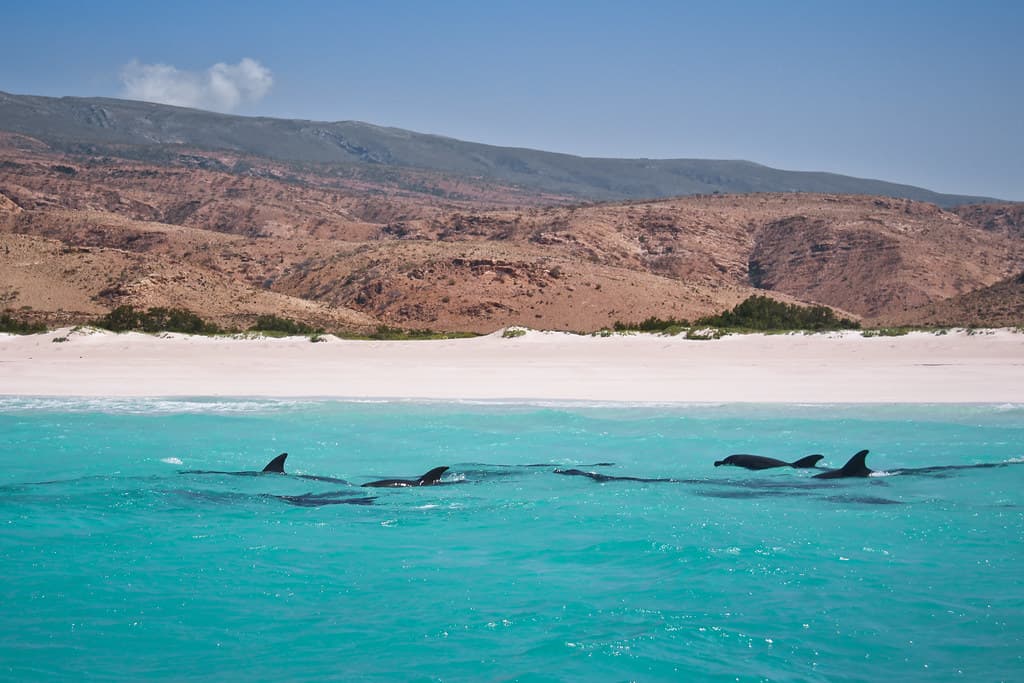
Boats travel past steep cliffs, rocky headlands, hidden coves, and clear blue water. Depending on conditions and wildlife activity, visitors may also encounter dolphins or seabirds during the journey.
This approach from the sea gives travellers a striking view of Socotra’s rugged western landscape and highlights how isolated Shoab Beach really is.
White Sand and Turquoise Water
Shoab Beach is known for its long stretch of light-colored sand and clear water.
The contrast between the bright shoreline, blue sea, and dry mountains creates a dramatic landscape that feels almost untouched. With little permanent development nearby, the beach retains a strong sense of wilderness.
The water is often inviting for swimming when sea conditions are suitable, while the broad sandy shoreline provides plenty of space for walking, relaxing, and photography.
A Quiet Side of Socotra
Many destinations on Socotra are famous for unusual plants and mountain scenery, but Shoab highlights the island’s equally impressive marine environment.
There are no large hotels, beach clubs, or crowded promenades here. Instead, visitors experience open space, natural sounds, and a coastline shaped almost entirely by wind and sea.
For travellers seeking solitude, Shoab offers a very different experience from conventional beach tourism.
Wildlife Along the Way
The waters around western Socotra support a variety of marine life.
Boat journeys toward Shoab are particularly associated with sightings of dolphins, although wildlife encounters can never be guaranteed. Seabirds can also be observed along the cliffs and offshore waters.
The surrounding marine environment forms part of Socotra’s wider ecological richness, which is one of the main reasons the archipelago has international conservation importance.
Part of the Socotra Archipelago
Shoab Beach lies within the extraordinary natural setting of the Socotra Archipelago, a UNESCO World Heritage Site.
Socotra is internationally recognized for its exceptional biodiversity and high levels of endemism. Many plants and animals found across the islands occur nowhere else on Earth.
Although Shoab is best known for its scenery, visiting the beach also provides a glimpse into Socotra’s broader coastal ecosystems, where mountains, desert landscapes, beaches, coral habitats, marine animals, and seabirds exist close together.
What Makes Shoab Beach Special?
Shoab’s greatest attraction is its simplicity.
There is little to distract from the natural landscape. Visitors can walk along the shoreline, swim when conditions permit, photograph the surrounding cliffs, enjoy a picnic, or simply sit beside the sea.
Because the beach is relatively difficult to access by land, arriving by boat also creates a feeling of discovery.
For many visitors, Shoab is not about activities or entertainment. It is about experiencing one of Socotra’s most secluded natural environments.
Visiting Responsibly
Remote places such as Shoab can be especially sensitive to tourism.
Visitors should avoid leaving rubbish, disturbing wildlife, damaging marine habitats, or collecting natural objects from the beach. Using experienced local guides and boat operators can also help support communities while encouraging responsible tourism practices.
Keeping Shoab undeveloped and clean is essential to preserving the qualities that make it special.
Shoab and Detwah Lagoon
Shoab Beach and Detwah Lagoon are often experienced as part of the same exploration of western Socotra.
Detwah offers shallow lagoon waters, wetlands, sand dunes, and important wildlife habitat near Qalansiyah. Shoab, by contrast, provides a more exposed and remote coastal experience reached across the sea.
Together, the two destinations show the remarkable diversity of Socotra’s western coastline.
A visitor can move from the calm ecological richness of a protected lagoon to a broad, isolated beach framed by mountains and open ocean—all within the same part of the island.
Final Thoughts
Shoab Beach is one of those places where the journey, landscape, and sense of isolation become part of the experience.
Its white sand, turquoise sea, surrounding cliffs, and remote location create a setting that feels far removed from modern coastal development.
For travellers exploring Socotra, Shoab offers more than a beautiful beach. It provides a chance to experience the island’s wild western coastline in a simple and memorable way.
Combined with nearby natural attractions such as Detwah Lagoon and Qalansiyah, Shoab Beach helps make western Socotra one of the most rewarding areas of the archipelago to explore.