

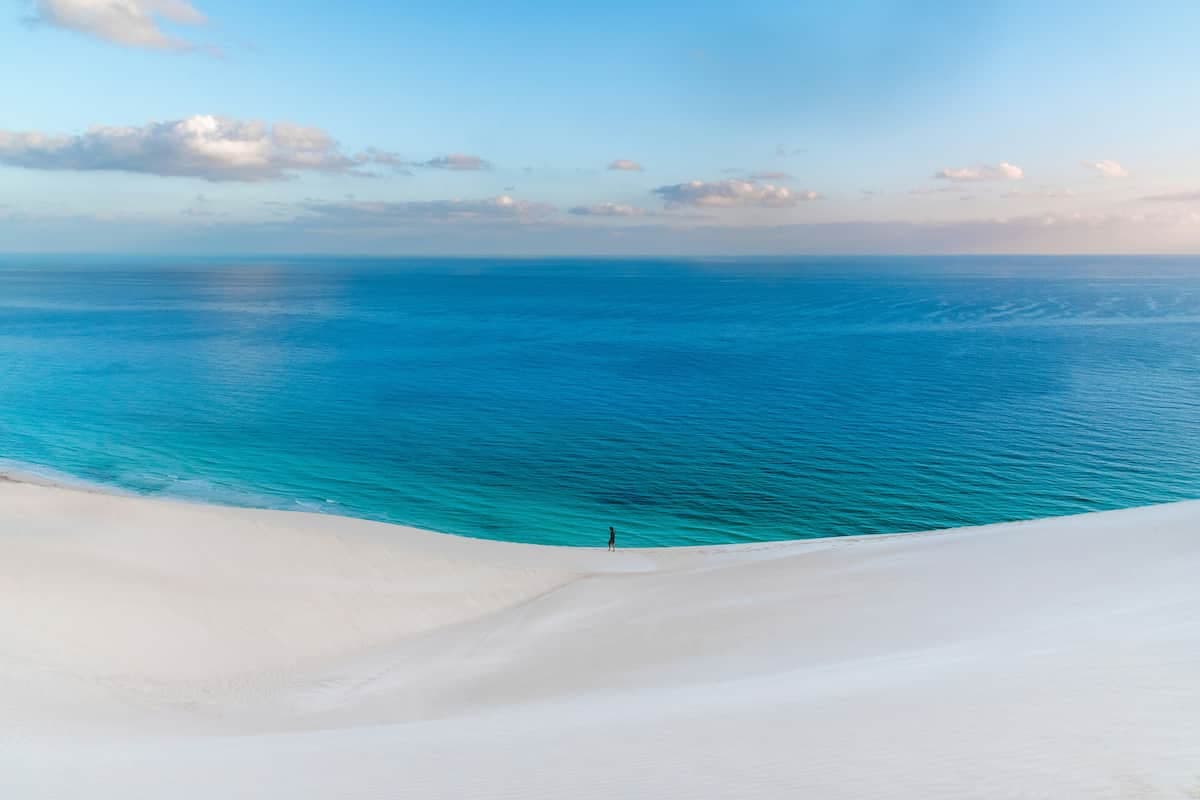
Zahik sand

Zahik Sand Dunes: Socotra’s Desert Landscape by the Sea
Zahik Sand Dunes are one of the most impressive desert landscapes on Socotra Island, Yemen. Located in the southern part of the island, the dunes stretch across a wide sandy area surrounded by rugged mountains and open coastal scenery.
They offer a completely different experience from Socotra’s beaches, caves, and forests. Here, the landscape is dominated by wind-shaped sand, open space, and dramatic views.
Giant Dunes and Open Landscapes
The dunes at Zahik rise in long, smooth slopes shaped by strong coastal winds.
Some sections form steep ridges, while others spread gently across the landscape. Their appearance changes throughout the day as sunlight creates new shadows and textures across the sand.
The surrounding mountains make the dunes feel even larger and more dramatic.
Sunrise and Sunset
Zahik is especially beautiful around sunrise and sunset.
During these hours, the sand changes color as the light becomes softer, creating excellent conditions for photography.
Long shadows form across the dunes, highlighting their curves and patterns.
For many visitors, these quiet moments are the most memorable part of the experience.
Walking on the Dunes
Exploring Zahik on foot is one of the best ways to appreciate the landscape.
Climbing the dunes can be physically demanding because of the loose sand, but reaching the higher ridges provides impressive panoramic views.
From the top, visitors can see mountains, open desert, and sections of Socotra’s coastline.
A Different Side of Socotra
Socotra is often associated with Dragon’s Blood Trees and unusual plants, but Zahik shows the island’s desert character.
The dunes create a landscape that feels simple and almost endless.
There are few buildings or artificial structures nearby, allowing visitors to experience the area in a very natural setting.
Photography at Zahik
Zahik is an excellent destination for landscape photography.
The smooth dune shapes, mountain silhouettes, and changing light provide endless compositions.
Footprints, wind patterns, and shadows can also create striking details in the sand.
Early morning and late afternoon are usually the best times for photography because the light is softer and more dramatic.
Camping Near the Dunes
Camping near Zahik can be a memorable part of a Socotra journey.
The area is peaceful and remote, with little artificial light.
On clear nights, visitors can enjoy wide views of the stars before waking to sunrise over the dunes.
The quiet surroundings make the experience feel far removed from busy towns and developed tourist areas.
Responsible Travel
Like many natural areas on Socotra, Zahik should be explored carefully.
Visitors should avoid leaving rubbish, damaging vegetation, or disturbing wildlife.
Camping areas should also be kept clean so the dunes remain as untouched as possible.
Travelling with local guides is a good way to explore the region responsibly and safely.
Zahik as Part of a Socotra Trip
Zahik works well as part of a wider journey through southern Socotra.
It offers a strong contrast to destinations such as Detwah Lagoon, Shoab Beach, Arher Beach, Dihamri Marine Protected Area, and Homhil.
Each location reveals a different side of the island, and Zahik adds a dramatic desert landscape to that experience.
Final Thoughts
Zahik Sand Dunes are one of Socotra’s most beautiful and peaceful landscapes.
Their sweeping shapes, mountain scenery, and open surroundings make them ideal for hiking, camping, photography, and enjoying sunrise or sunset.
For travelers exploring Socotra, Zahik offers a powerful reminder of how diverse the island really is — a place where desert, mountains, and sea can exist within the same remarkable landscape.